28 November 2025 · 6 min read · Redaktion webdesignat.ch
Local SEO Switzerland: A Practical Guide
Local SEO in Switzerland: Google Business Profile, NAP consistency, directories, reviews and multilingual locations explained.

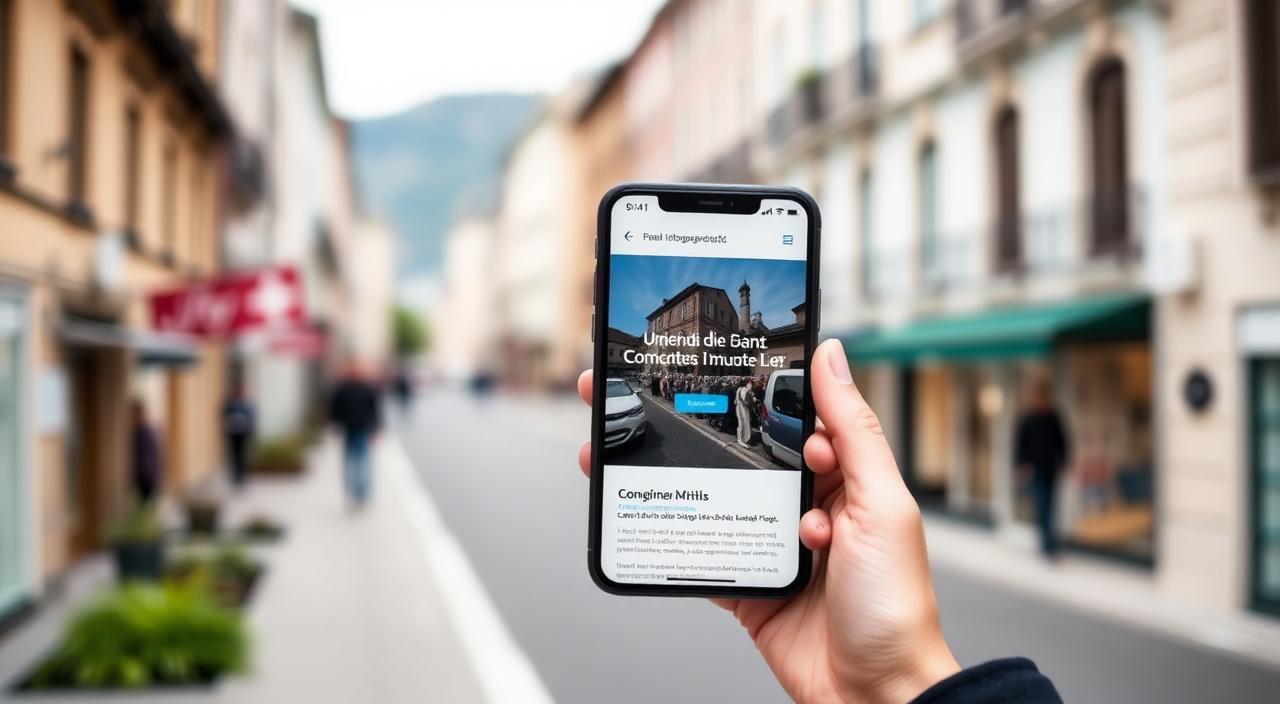



In today's digital marketplace, attracting local customers is paramount for Swiss businesses. While a broad online presence is beneficial, the real growth often comes from being visible to potential customers in your immediate vicinity—be it in Zurich, Geneva, or a smaller local community. This is where Local SEO in Switzerland comes into play. It is the practice of optimising your online presence to rank higher in local search results. For a company with a physical location or one that serves a specific geographic area, local SEO is not just an option; it's a necessity. It involves a distinct set of strategies tailored to connect you with your target audience when they are actively searching for your services. From optimising your Google Business Profile to managing reviews and ensuring your technical SEO is sound, a well-executed local strategy can significantly increase foot traffic, phone calls, and, ultimately, revenue. This guide will walk you through the essential components for achieving local search success across Switzerland's unique, multilingual landscape.
The Foundation: Google Business Profile & NAP Consistency
For any business serious about local SEO in Switzerland, the cornerstone of your strategy is your Google Business Profile (GBP). This free tool from Google is arguably the most critical factor for ranking in the coveted "Local Pack"—the block of three business listings that appear at the top of search results for local queries. A fully optimised profile acts as a digital storefront, providing potential customers with all the essential information they need at a glance. This includes your business hours, address, phone number, and photos. To maximise its impact, you must complete every section of your GBP with care and accuracy. Select the most relevant business categories, write a compelling business description, and regularly use Google Posts to share updates, offers, and news.
Ensuring NAP Consistency
Beyond GBP, the concept of NAP (Name, Address, Phone number) consistency is fundamental. Your core business information must be identical across all online platforms where it appears. This includes your website, social media profiles, and online directories. Even minor variations, such as using "Strasse" on one site and "Str." on another, can create confusion for search engines and dilute the strength of your local signals. Google relies on this consistency to verify that your business is legitimate and that its location data is accurate. An inconsistent NAP record can erode trust with search engines, leading to lower rankings and reduced visibility. The process involves auditing your existing citations and methodically correcting any discrepancies. This foundational work, while sometimes tedious, pays significant dividends by building a solid and trustworthy B2B online identity that both search engines and customers can rely on.
Building Trust: Local Directories and Customer Reviews
Once your Google Business Profile is optimised and NAP consistency is established, the next layer of your local SEO strategy involves building citations in reputable online directories. For businesses in Switzerland, this means focusing on platforms that are highly relevant to the Swiss market. Key domestic directories like local.ch and search.ch are essential starting points. Having accurate listings on these sites sends strong geographic signals to search engines, reinforcing your connection to your local area. In addition to these, international directories with a strong presence in Switzerland, such as Yelp, should also be part of your strategy. The key is to select directories that are well-regarded and relevant to your industry. A widespread and consistent presence across these platforms not only helps search engines validate your business information but also creates new pathways for customers to find you.
The Power of Customer Reviews
Customer reviews are a major ranking factor for local search and a powerful tool for building social proof. Positive reviews on your Google Business Profile and other platforms signal to Google that your business is trusted and valued by customers. Actively encouraging satisfied customers to leave feedback should be an ongoing part of your operations. However, a comprehensive review strategy goes beyond simply collecting positive ratings. It is equally important to respond to all reviews, both positive and negative. A thoughtful response to a positive review shows appreciation, while a professional and helpful response to a negative one can mitigate damage and demonstrate your commitment to customer service. This engagement shows potential customers that you are an attentive and caring business, which can be the deciding factor when they are choosing between competitors. Ultimately, reviews and directory listings work together to build a strong foundation of trust for your local SEO in Switzerland.
On-Page SEO for Local Targeting
Effective local SEO in Switzerland extends beyond external signals and requires careful on-page optimisation of your website. This involves tailoring your site's content to capture local search intent. Start by conducting keyword research to understand how potential customers are searching for your services within specific geographic areas. Your target keywords should combine what you do with where you do it, for example, "web design Zurich" or "accountant in Geneva canton." These locally-focused keywords should be integrated naturally into your website’s titles, headings, meta descriptions, and body content. One of the most effective strategies is to create dedicated location pages if you serve multiple areas. Each page should provide unique and valuable content relevant to that specific city or canton, rather than just swapping out the location name. This could include local case studies, project highlights, or directions to your office from local landmarks.
Using Structured Data for Local SEO
To give search engines a clearer understanding of your business information, implementing structured data is essential. Schema.org provides a vocabulary of microdata that you can add to your website's HTML. For local businesses, the LocalBusiness schema is particularly powerful. It allows you to explicitly mark up your NAP details, business hours, and geographic coordinates. This structured data makes it easier for search engines to parse and display your information in rich snippets, such as the Local Pack or Knowledge Panel. Correctly implemented schema can enhance your visibility and provide a competitive edge. Ensure that the information in your structured data perfectly matches what is on your Google Business Profile and other citations to maintain consistency. For a deeper dive into improving your website's performance, feel free to contact us for a personalised consultation.
Key Technical SEO Factors for a Local Audience
While content and citations are crucial, the technical health of your website forms the bedrock of any successful local SEO campaign. A seamless user experience is a significant ranking signal, and for local search, this often begins with mobile performance. A majority of local searches happen on smartphones, as users look for services while on the go. Therefore, having a mobile-friendly, responsive website is non-negotiable. Your site must load quickly and be easy to navigate on a small screen. Slow loading times or difficult navigation can lead to high bounce rates, signalling to Google that your site provides a poor user experience, which can harm your local rankings. You should regularly test your site's mobile usability and performance to ensure it meets the expectations of today's users.
Core Web Vitals and Site Structure
Google's Core Web Vitals (CWV) are a specific set of metrics that measure a website's loading performance, interactivity, and visual stability. These metrics—Largest Contentful Paint (LCP), First Input Delay (FID), and Cumulative Layout Shift (CLS)—are direct ranking factors. A poor CWV score can hinder your visibility in both organic and local search results. Use tools like Google PageSpeed Insights to analyse your performance and identify areas for improvement. Beyond speed, a logical site structure is also important for local SEO. Your website should be easy for both users and search engine crawlers to navigate. This includes having a clear menu, logical internal linking between related pages (such as linking from a service page to a relevant location page), and an XML sitemap. A well-structured site allows search engines to efficiently find and index all your important content, including any locally-focused pages, strengthening your overall SEO foundation. For help with a technical audit, you can always request a quote.
Mastering Multilingual SEO in Switzerland
Switzerland's linguistic diversity presents a unique challenge and opportunity for local SEO. To effectively reach customers across the country, businesses must cater to German, French, and Italian-speaking regions. Simply translating your website is not enough; a successful multilingual SEO strategy requires careful technical implementation and cultural adaptation. The most robust technical solution is to use a dedicated URL structure for each language. This is typically achieved through subdirectories (e.g., `example.ch/de/`, `example.ch/fr/`, `example.ch/it/`). This structure sends a clear signal to search engines about the language and geographic targeting of each version of your site. It is far superior to using cookies or browser settings to change the language on a single URL, as search engine crawlers may only ever index the default language version.
Hreflang Tags and Content Localisation
To complement the subdirectory structure, you must implement `hreflang` attributes. These HTML tags tell Google which language and, optionally, which region a specific page is targeting. They also link the equivalent pages in other languages, preventing duplicate content issues. For example, a tag on the German page would point to the corresponding French and Italian pages. This ensures that a user in Ticino sees the Italian version of your site in their search results, while a user in Romandy sees the French version. Beyond the technical setup, true localisation involves adapting your content to each region's cultural nuances. This includes using local dialects and expressions, featuring region-specific case studies or testimonials, and ensuring all contact information and currencies are locally appropriate. A well-executed multilingual strategy for local SEO in Switzerland demonstrates a deep commitment to serving all Swiss customers, building trust and driving engagement across language barriers.
Measuring Success and Advanced Strategies
A successful local SEO strategy is not a "set it and forget it" activity. Continuous measurement and refinement are essential for long-term growth. Google Search Console (GSC) is an indispensable tool for this purpose. Within GSC, the Performance report allows you to track which queries are driving traffic to your site. You can filter this data to see how you rank for local keywords in specific cities or cantons. By monitoring impressions, clicks, and average position for terms like "bike repair Geneva," you can gauge the effectiveness of your on-page and off-page optimisation efforts. GSC also provides critical insights into technical health, mobile usability, and Core Web Vitals, alerting you to issues that could be harming your local visibility. Regularly reviewing this data helps you make informed decisions, whether it's optimising a page that's underperforming or doubling down on a keyword that's already delivering results.
Advanced Tactics: Local Link Building
Once you have the fundamentals in place, you can explore more advanced tactics like local link building. This involves acquiring backlinks from other reputable local websites. Links from well-regarded local businesses, community organisations, or local news outlets act as powerful endorsements, signalling your relevance and authority within a specific geographic area. You might earn these links by sponsoring a local event, partnering with a complementary business, or creating a valuable local resource that others want to share. For instance, a real estate agent in Bern might create a detailed guide to the city's different neighbourhoods, which could attract links from local bloggers and community forums. While more challenging than directory citations, local link building can provide a significant competitive advantage. If you require expert assistance in analysing your performance or developing an advanced local SEO Switzerland strategy, we encourage you to get in touch with our team.
FAQ
How much does local SEO cost in Switzerland?
The cost of local SEO in Switzerland can vary significantly based on factors like your industry's competitiveness, your geographic target area, and the current state of your online presence. A small business in a niche market might see results with a few hundred francs per month. However, a company in a highly competitive sector in a major city like Zurich or Geneva may need a larger investment. Prices for comprehensive services from an agency, including ongoing optimisation and content creation, are typically in the range of CHF 800 to CHF 2,500+ per month. Always request a detailed proposal outlining the specific deliverables.
How long does it take to see results from local SEO?
Local SEO is a long-term strategy, not an instant fix. While some initial improvements, like optimising a Google Business Profile, can yield results within a few weeks, more substantial and lasting gains take time. Typically, you can expect to see meaningful movement in local rankings and an increase in traffic and leads within 3 to 6 months. This timeline depends on the level of competition, the authority of your domain, and the consistency of your SEO efforts. Patience and persistent effort are key to achieving and maintaining high visibility in local search results.
Why isn't my business in the Google Local Pack?
Not appearing in the Google Local Pack (the top 3 map listings) can be due to several factors. Common reasons include an incomplete or unoptimised Google Business Profile, inconsistent NAP (Name, Address, Phone) information across the web, and a lack of customer reviews. It's also influenced by your website's own authority and relevance to the search query. High competition in your area also plays a significant role. Start by fully completing your GBP, ensuring your business category is correct, and encouraging reviews. Then, systematically check for and correct any inconsistent directory listings.
Do I need a physical address for local SEO in Switzerland?
For traditional local SEO, a verifiable physical address is highly important, as it helps Google confirm your location. This is crucial for appearing in map-based results for queries near your location. However, 'Service Area Businesses' (SABs)—like plumbers or cleaners who travel to their customers—can also perform well in local SEO. You can set up your Google Business Profile to show a service area instead of a physical storefront address. While a physical address in the target city can provide an advantage, it is still possible to rank for local searches without one by focusing on other local signals.
Ready for your next website?
Compare quotes from vetted Swiss agencies — no commitment.
Request quotes